Layered Succulents in Pots: 3D SVG for Paper Flowers
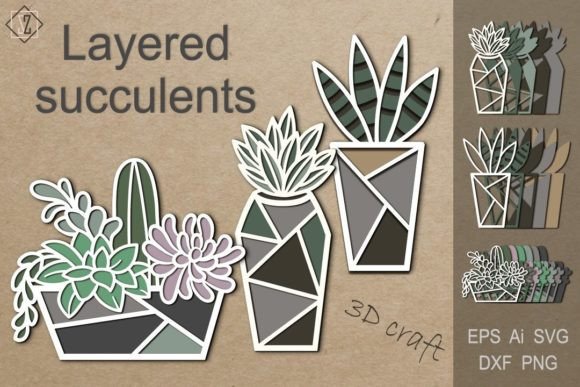
I recently received a brief from a client launching a boutique handmade candle line called "Greenhouse & Glow." They wanted a brand identity that felt organic, modern, and tactile. They needed visuals that screamed handmade business without looking cheap or generic. As I sifted through my collection of graphic design assets, the Layered Succulents in Pots. 3D Craft. file stood out immediately. It wasn't just another clipart image; it was a structured digital product designed with the complexity required for professional brand identity work.
The first impression of this asset is one of depth and intentionality. Unlike flat vector illustrations that often feel sterile on a screen, this design leverages the power of a 3D SVG to create a layered effect. The mood it creates is fresh, botanical, and inviting. It fits naturally into projects targeting eco-conscious consumers, craft enthusiasts, or lifestyle brands. When I placed the initial layers onto a mockup for their packaging, the visual hierarchy shifted instantly. The succulents didn't just sit on the label; they seemed to pop off the surface, adding a sense of dimension that flat colors simply cannot achieve.
Real-World Application in Client Projects
In my experience working with print-on-demand sellers and Etsy products, the versatility of a layered file is the difference between a passable design and a premium product. For the "Greenhouse & Glow" project, I considered how Layered Succulents in Pots. 3D Craft. would perform across various touchpoints. Because the file includes separate folders for each layer, I could manipulate the spacing to control the perceived depth. This is crucial for packaging design, where you want the imagery to look substantial but not overwhelming.
This asset excels in large layout areas and hero graphics. Imagine using these layered elements as a background texture for a website banner or a large-scale poster. The individual pots and leaves can be scattered to create a dynamic composition that guides the eye across the page. For social media graphics, specifically Instagram posts and Pinterest pins, the layered nature allows for creative overlays. You can place text over the darker shadows of the pot while keeping the bright green leaves visible, ensuring the message remains clear while maintaining aesthetic appeal.
For Cricut users and those creating physical merchandise, the utility here is undeniable. The inclusion of formats like EPS10, AI, DXF, and SVG means this isn't just a static image; it is a production-ready tool. I tested the layers for a set of t-shirt design concepts. By isolating specific leaves and arranging them in a repeating pattern, I created a subtle, textured print that looked far more sophisticated than a single solid graphic. Similarly, for sticker design, the ability to export a clean PNG with transparency allowed me to create die-cut shapes that adhered perfectly to water bottles and laptop skins.
Strategic Placement and Visual Hierarchy
While this design asset is powerful, it requires strategic placement to maintain visual hierarchy. It works best as a decorative accent or a supporting brand element rather than the sole focus of a minimalist logo. If your brand relies on extreme minimalism, the intricate details of the layered succulents might introduce too much noise. However, for editorial design, blog visuals, or marketing materials that need an emotional hook, this asset is a goldmine.
Consider the context of marketing visuals. In a crowded digital landscape, a well-executed 3D effect captures attention. I used the layered pots to frame product photography for a seasonal campaign. The depth of the succulents created a natural vignette around the central subject, drawing the viewer's gaze inward. This technique enhances audience engagement by making the content feel curated and thoughtful. It signals to the consumer that the brand cares about details, which builds visual trust.
However, there are scenarios where caution is advised. In low-contrast designs or on busy backgrounds, the layers can become muddy. If you place the full-color layered image over a complex photograph, the distinct separation of the pots and plants may be lost. In such cases, I recommend converting the asset to a monochromatic version or using it as a subtle watermark. Additionally, for very small sizes, such as favicons or tiny social media avatars, the fine details of the layers might blur. Always test the asset at its intended final size before committing to a full rollout.
Technical Workflow and Professional Checks
As a designer, my job doesn't end at dragging and dropping an image. Before delivering any commercial design to a client, I run a rigorous checklist. With Layered Succulents in Pots. 3D Craft., the workflow begins with inspecting the file formats. The availability of DXF is particularly impressive for those sending files to laser cutters, while the SVG ensures crisp rendering on high-DPI screens.
I always start by testing the asset in black and white. This strips away the color psychology and forces me to evaluate the shape and structure. Does the silhouette hold up? Are the layers distinct enough when flattened? Next, I check the contrast on both light and dark backgrounds. The transparency of the PNG files included in the download is generally clean, but I always zoom in to ensure there are no jagged edges or halos around the vector paths.
Typography pairing is another critical step. When I pair these organic, rounded succulent shapes with a serif font, the result feels classic and editorial. A script font adds a personal, handwritten touch that complements the handmade vibe. However, if the project demands a bold display font for headlines, I ensure the succulents don't compete for attention. The text should remain the primary focal point, with the plant layers acting as a supportive stage.
Finally, and perhaps most importantly, I verify the commercial license. Even though the file is labeled as a design bundle suitable for small business branding, understanding the terms of use is non-negotiable. Can I sell the final product? Can I modify the layers? For this specific asset, the separation of layers suggests it is built for customization, which is ideal for creating unique sublimation designs or custom Canva templates. Confirming these rights protects both the designer and the client from legal pitfalls.
Final Verdict for Creative Professionals
The Layered Succulents in Pots. 3D Craft. is more than just a pretty picture; it is a functional component for serious design work. Whether you are building a modern design portfolio, crafting a web design interface, or producing printable wall art, this asset offers the flexibility needed to elevate a project from amateur to professional. Its ability to simulate depth through simple layer manipulation makes it a standout choice for anyone looking to add a touch of nature-inspired elegance to their creative marketplace offerings.
If you are a content creator or blogger looking to refresh your visual style, or a marketer aiming to boost engagement with authentic-looking imagery, this Paper Flowers inspired design delivers. It bridges the gap between digital convenience and physical texture, offering a solution that is as practical as it is beautiful. For clients who value quality, detail, and a cohesive brand story, this asset is a smart investment that pays dividends in the final presentation.